

I think as photographer’s we always want to be in control. Whether it’s controlling our subject, or the light, or in my case, the gear. But if we stop worrying about the technical and mechanical things I think we’ll find that things will just fall into place. This is the story of one of those times which just happened.
I had just returned home from a trip to Arizona for my first Milky Way shoot. While it wasn’t everything I’d hoped for, I was very pleased with some of the images I came home with. Needless to say, I was riding on a high. I’d taken the week off from work following the trip and decided to use it to get back behind the camera some more.
My mom told me that the SpaceX launch was happening Monday morning and, although I was tired from the trip and had planned on sleeping in, I decided to head to the beach to see if I could capture any cool images.
I was loaded for bear. I had my Fuji X-1H with the 100-400 and my Sony A7iv with the 70-200. I arrived well ahead of the launch, setup my tripod and the gimbal for the Fuji to support the heavier lens and planned on shooting the 70-200 handheld. In the darkness, by the light of my red headlamp, I kept reviewing the camera settings even after checking them the night before. There was no way I was going to miss the shot if it presented itself.
I spent the next 30 minutes anxiously waiting. I didn’t have any clue what I’d witness, but the skies were beautifully clear. I positioned myself near our pier to use it as a foreground subject to add a little flavor to the image. I already knew that it was scheduled to fly north meaning it would be right in front of me. I had the livestream of the launch on my phone so I knew that it had launched on time.
Sure enough, a minute or so later, I saw the small sliver of red flame streaking through the sky. The Cape is a couple of hours from me so it was pretty small. Certainly nothing to get excited about.
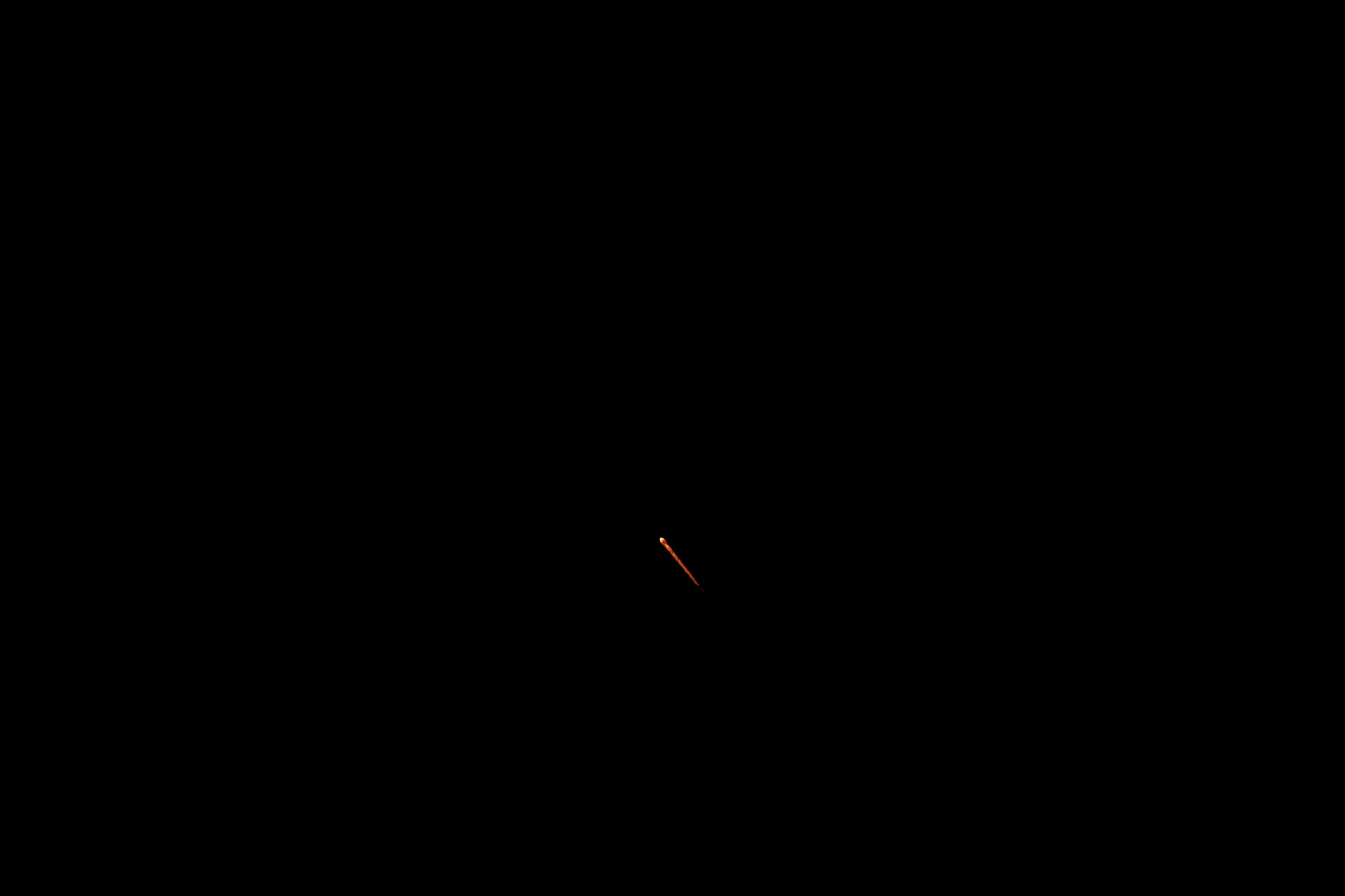
However, as the rocket stopped climbing vertically and began traveling more horizontal, everything changed. It’s hard to describe in words the transformation I experienced. It was ethereal. It was, for lack of words, beyond words. It was like nothing I’d ever seen before.
As the exhaust left the nine rocket engines, crystallizing the water in the air around them, the early twilight glow began to illuminate the plume. Minutes after the launch, and directly before my eyes, was one of the most beautiful things I’ve ever seen.
This is where things went south. The 100-400 quickly proved too long to capture the entire scene. I went back and forth trying to get the framing just right and nothing worked. I transitioned to the 70-200 which was the right length, but despite all of my preparation, I couldn’t get it to work they way I’d envisioned. I toggled between manual and autofocus. Crap. I played with the exposure. Crap.
Here was this incredible scene ripe for the taking, and nothing was working. The stress and anxiety was rapidly rising.
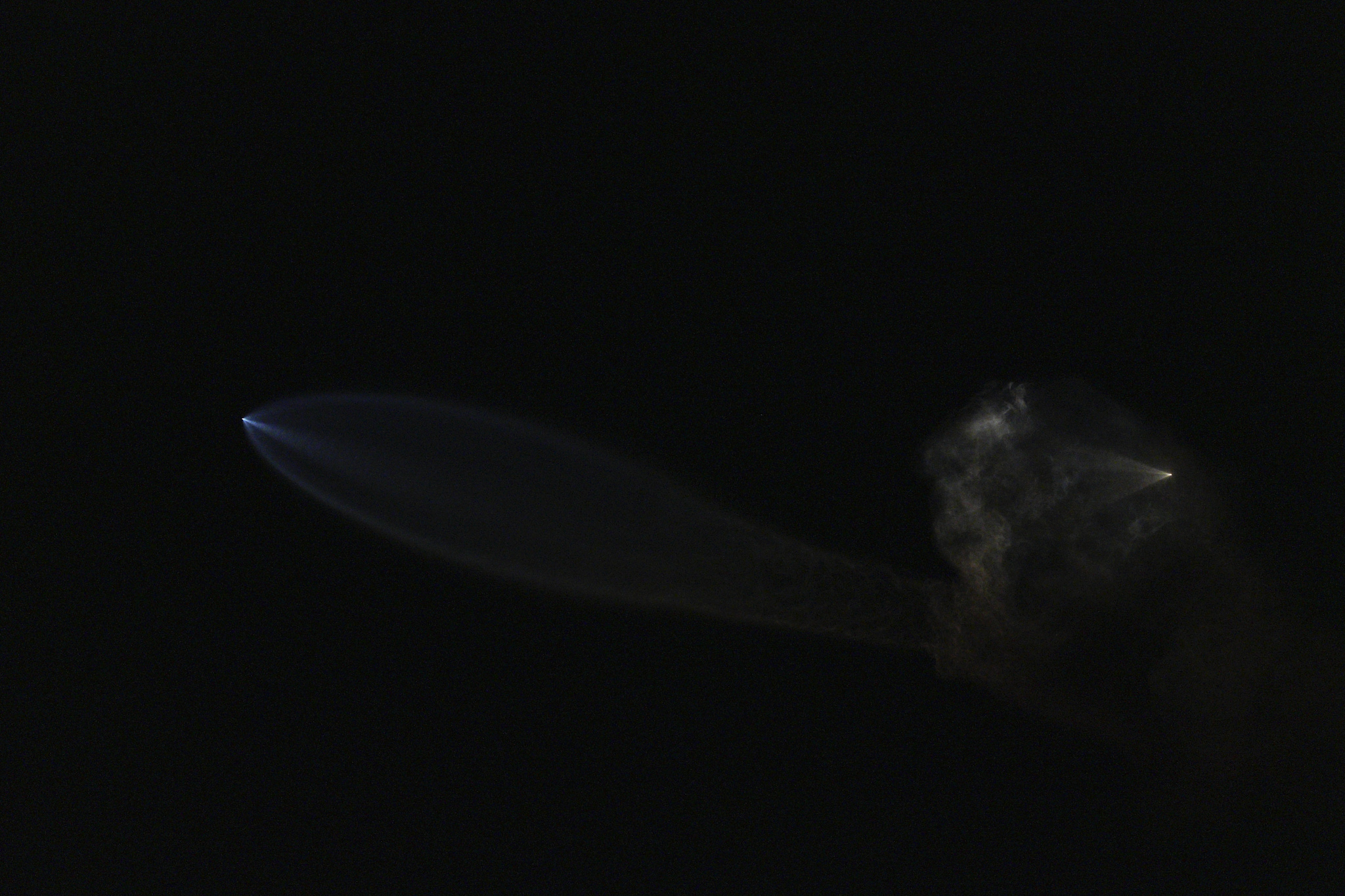
My frustration grew. Both with myself and with my gear. This wonderful moment was going to be over soon and all I could do was struggle with my gear.
We get so wrapped up in having the latest and greatest. YouTube videos and internet reviews keep feeding our hunger for the “best” lens or the “greatest” camera. Usually, these have steep learning curves, too many options, and grossly over-complicate things. This is one of the main reasons I love my Leica cameras so much. They strip all of this away and let me put all of my energy into capturing the image I want rather than wrestling with technology.
Realizing that the moment would be gone, I finally had an epiphany. Point. And shoot. Which is exactly what I did. I put the Sony back in my bag and grabbed my iPhone. What resulted is arguably one of my favorite images of the tens of thousands I’ve taken over the years. Honestly, had I kept trying with the Sony and the 70-200, I probably would have gone home bitter, disappointed, and worse, empty handed. Instead, I allowed myself to accept the fact that the cameras in the iPhone 14 Pro are pretty damned good. Ignoring the thousands of dollars I had at my disposal, I chose to let go of my thoughts that “it’s just a phone”. I immediately loved the results. I hope you do as well.
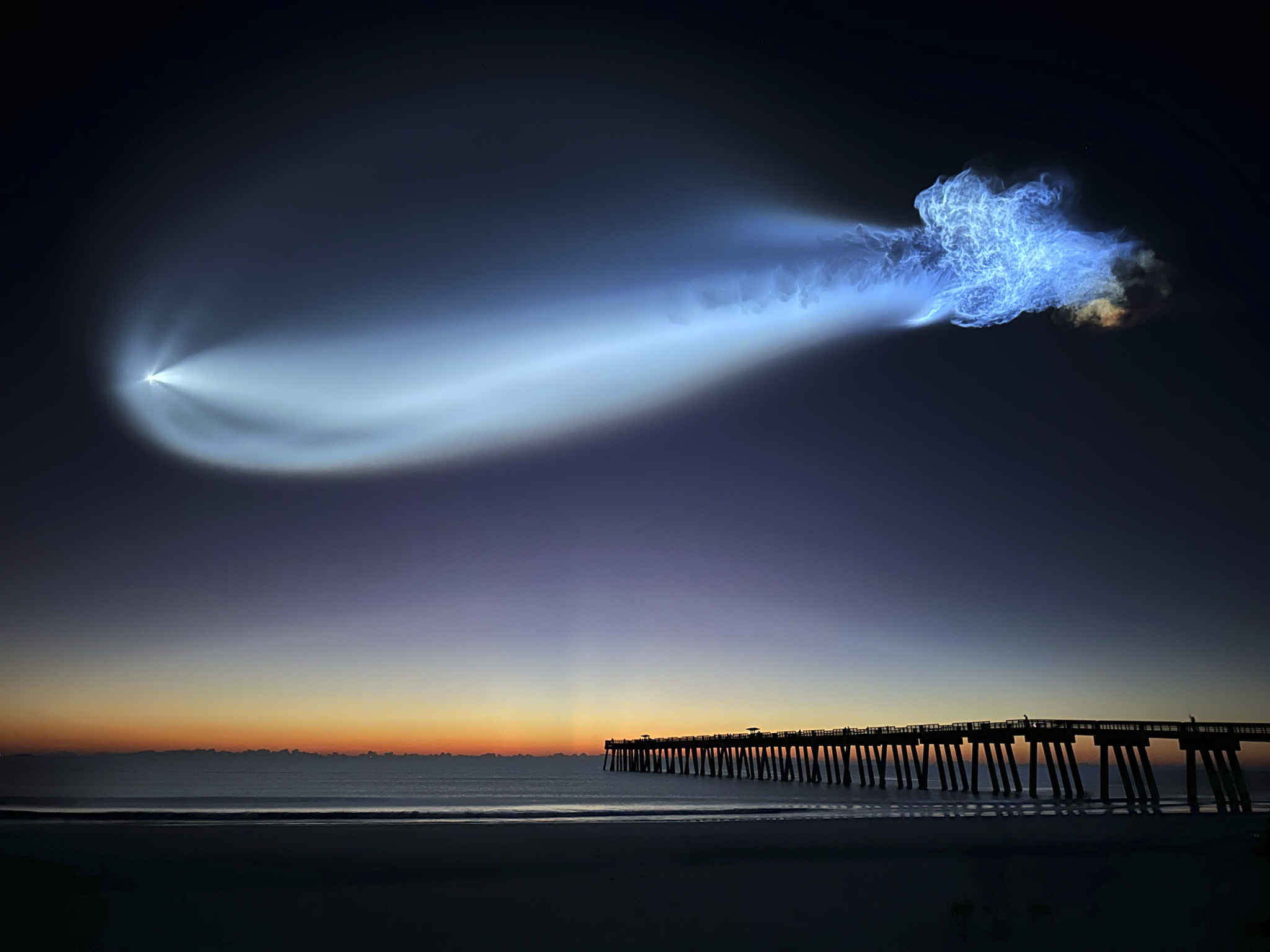
That’s right. That image was taken with my iPhone. And I’ve received so many compliments. Allowing myself the freedom to use the best tool for the job, in that moment, made it possible for me to capture what might be a once-in-a-lifetime image. And as if to give me a little extra encouragement for letting go, the crazy vortex portion of the cloud lasted at least 30 minutes. The rocket was well on its way to space, but I was able to revel in the incredible beauty it left behind for a little longer.
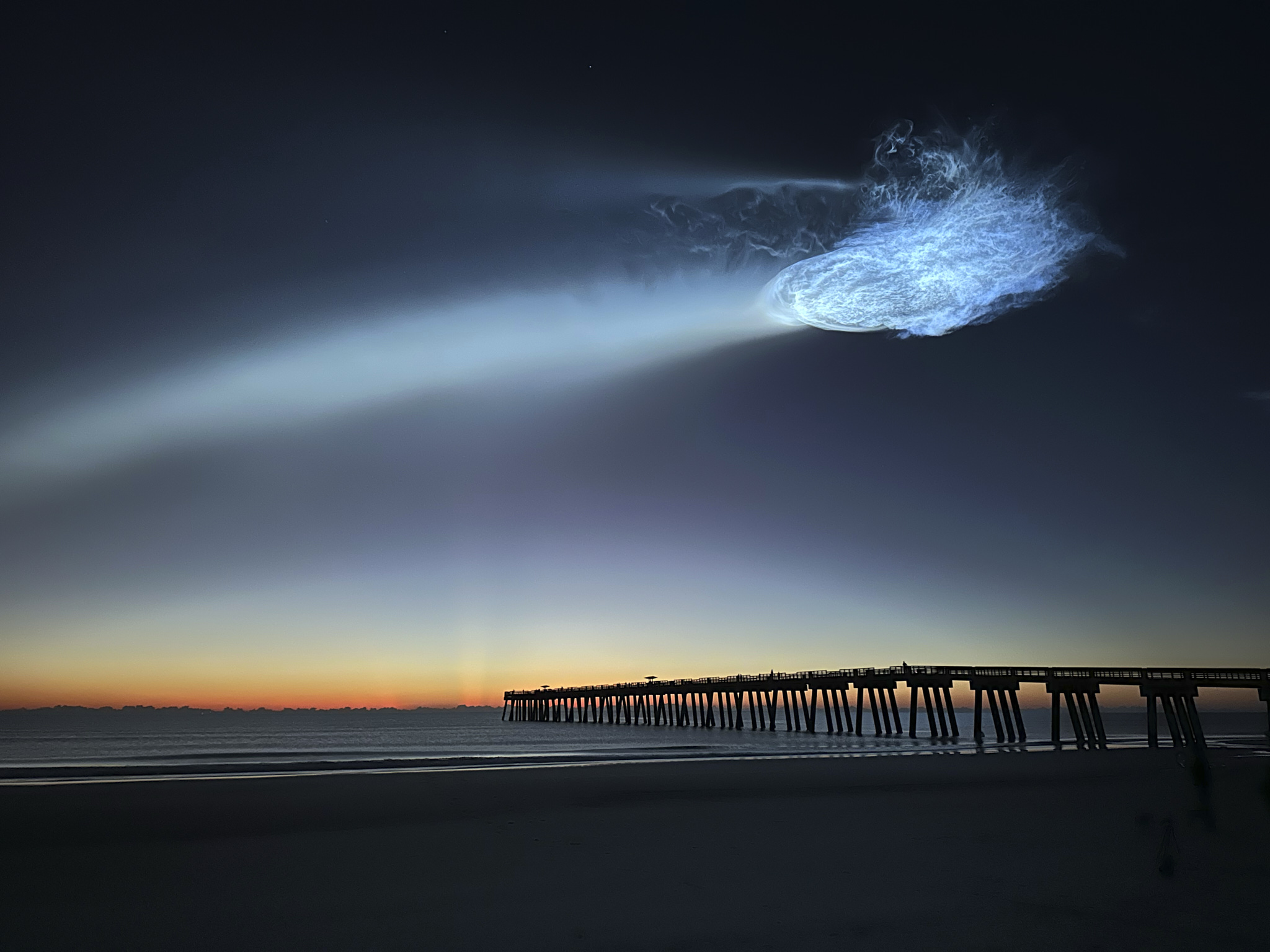
I watched the sun rise. Something I don’t do very often. I scored an incredible image. All thanks to letting go.
So the next time you find yourself battling your camera, or yourself, or simply trying too hard to get the proverbial planets in alignment, stop. Take a breath. And let go. Stop trying to make the picture, and just let it happen. You might just be surprised at the results.

Sorry, the comment form is closed at this time.